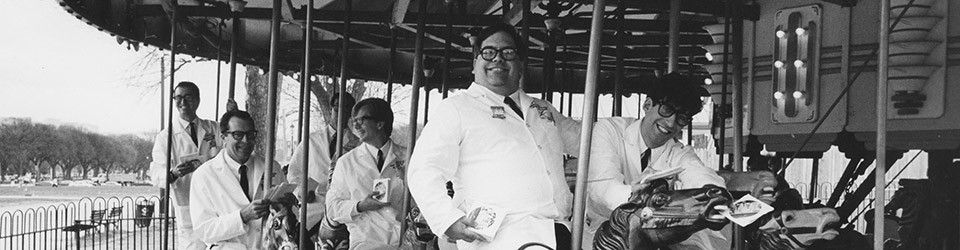
What Your Proof Sheets Say About Your Photographs … and You

This past week the New York Times had a terrific essay written by Anika Burgess entitled The Analog Allure of Photographers’ Contact Sheets. Not only was it a good read, but it was accompanied by reproductions of some wonderful proof sheets pulled from the newspaper’s archives. Sorry, that’s what I’ve always called them and the terms are interchangeable!

You can find it here: https://www.nytimes.com/2025/08/18/arts/photos-contact-sheets-jfk.html

After reading it, I got to thinking about what we can learn from studying our own proof sheets. We all make proof sheets of our work. OK, I hope we all do! If you don’t you need to!! I’ve written about them before, but for the uninitiated, a proof sheet is simply a print that displays all the images from a roll of film. When we look at it we can see what pictures are worth printing, whether they need to be cropped at all, and whether they were properly exposed.

We study them with our magnifier loupes and then mark the frames that look promising. In my case I also use two small L shaped pieces of a scrap mat board I can adjust to determine whether a picture needs to be cropped at all. Then I mark the frame accordingly.

But is there more we can learn from our proof sheets? I think so and agree with several of the points made in the Times essay. “With a single contact sheet, a photographer could assess all the decisions and hesitations, steps and missteps that went into taking the photo.” The photographer can also go back and study “What you were doing, what your story was, what you were trying to say, were you successful, what could you have done differently?” This was referring to work done by newspaper photographers, but it really applies to all of us, whatever type of pictures we make.

We don’t always get around to printing our pictures as quickly as we’d like to. Or sometimes we wait for a certain time of the year. I’m pretty selective. I don’t make lots of prints during the course of the year, and sometimes I just wait until the last couple of weeks to print the ones I want. Having stepped back for a while, the edited proof sheets enables me to take a more objective and studied approach to looking at the frames previously selected. Now I can see if I still feel as good about them as I did before.  I might even notice something that didn’t strike me during the first go around, but now looks better!

The proof sheet also serves as a visual diary … at least for me. It helps me to recall the events that transpired when I made my pictures and brings back fond memories that go beyond the making of the picture itself.  Also, having this “record” is particularly useful as I go back and look at older proof sheets for possibilities previously not considered.  In fact, I’ve been putting together a list of newly seen possibilities … some of the pictures having been made over fifty years ago.

Finally, I love being able to hold my proof sheet in my hand and physically look at it … slowly … and this may be the most important thing. Digital capture doesn’t enable this, although I suppose a physical document could be made. I’ll bet this never happens though.  I don’t want to see my possibilities on a computer screen. Like the Times piece said “… a contact sheet is everything a digital photograph isn’t: immutable, physical, finite”.

In the end though, for all its usefulness, and for all it enables, the proof sheet says a lot about you … as a photographer … and a person.

Stay well,

Michael

My New Keep-In-The-Car Camera

I was given an inexpensive but good camera by my next door neighbor who’s moving and cleaning out stuff.  An Olympus Stylus Zoom 140! It was sitting in a drawer unused for years. Solid build with a good quality lens. So I got a new battery for it and found the instruction manual online.  Great … only 73 pages long! Once I figured out how to turn it on it seemed to work. Seemed, to because it’s a lot more electronica than I’ve ever held in one hand before … and it’s probably fifteen years old or more!

I’ve talked about always having a camera with you when you’re going places, but to be honest I’ve always felt a little nervous about keeping an almost three thousand dollar camera and lens combo in my glove compartment all the time.

Now I have nice camera I won’t have to worry about if something happens to it. And here’s the thing … while this baby has much more built-in firepower than I would ever need or want, it was in mint condition and free! Now if I’m driving to who knows where at any time of the day I’ll be covered for almost any contingency. No excuse not to make the photograph!  I mean come-on, this thing has auto focus, a 38-140mm zoom, built in flash, automatic meeting, auto film advance and rewind, plus who knows what more!  And thankfully, it’s not too over the top like today’s silly contraptions that are computers that happen to make pictures. I think the new ones will even cook your meals and assist you with critical lifestyle decisions.

It may be the perfect no excuses camera!  Yup. So I finally read the manual, then loaded it with film with the recommended speed of 400 ASA. That’s right … Tri-X, baby!  And now I ‘ve already made ten exposures I never would have were it not for my new friend being with me!!

Look, you can pick up one of these beauties dirt cheap. Get one and you might even think it’s so cool that you make more pictures! Put it in glove compartment of your car … loaded with film of course … and be prepared for all the lucky opportunities that will present themselves!

Stay well,

Michael

Gianni Berengo Gardin, 1930 – 2025

Perhaps my head has been in the sand, or that there are a number of great black and white analog photographers I just don’t know about. This past week I learned about the passing of the Italian photojournalist and street photographer Gianni Berengo Gardin. How? By catching up with a mostly music and stereo blog I follow! After looking around the Internet to find out more about Gardin, I quickly realized he was a true master!!!  His work is nothing short of amazing and prolific, with a million and a half negatives and by some accounts over 250 books as a sole or major contributor to his credit.  His work is also included in the holdings of major museums such as Museum of Modern Art.

I’m upset that I’ve just discovered him, and only because he passed away and was mentioned on the Italian website I frequent. Sad. The man was a genius and now I know it too. I have a new homework assignment … to research his many books and get one or more of them … and soon!

So what does this mean for me and maybe you? Yes, there most certainly must be many, many great black and white (and color too) photographers out there we’ll never know about. Like Gianni Berengo Gardin.  But there are many others that have been/are out there publishing and exhibiting, not to mention all those that were/are great but do the work solely for themselves. Or those that simply don’t have the desire, or lack the horsepower to play the game. Think Vivian Maier.  All we can do is try to find them, discover their wonderful work, learn from it and enjoy it.

I can’t really say any more about Gardin now, because there’s so much more I need to learn. But what I can say is it’s something I must do. And then I need to discover and learn what I can about the many others I need to know about.

So much to learn, so little time.  #$$%^&*!

If you’re not familiar with Gianni Berengo Gardin, please do yourself a big favor and check out his wonderful and inspiring work. Better late than never … a true great!

Stay well,

Michael

Does Presentation Matter?

In the end I decided not to go. That’s right. After a lot of thinking about it, I finally decided not to go to New York and see the giant Diane Arbus show Diane Arbus: Constellation at the Park Avenue Amory.

It turns out the 450 plus print retrospective of well-known and previously unpublished images has become a polarizing event to some, mainly due to manner in which the many prints are displayed.  Here’s a link from the Park Avenue Army that discusses the show and includes a short video

https://www.armoryonpark.org/programs_events/detail/constellation?gad_source=1&gad_campaignid=22593218138&gbraid=0AAAAAo1ABwXj-e4C9ZtAHxSS3I-CFB4p0&gclid=CjwKCAjw7rbEBhB5EiwA1V49nQ_vkk5W4VMzYLCVOWWIadlgQKfhnWCvMP7KXW10e_iqPKtj1WQhKxoCyTkQAvD_BwE

Just in case you can no longer access the link, here’s a quote:

“These dynamic pictures are given an evocative new life at the Armory in an immersive installation that brings together all of the photographs (some still unpublished) from the set of more than 450 prints by Neil Selkirk, a photographer and student of hers and the only person authorized to make prints from her negatives. This unconventional constellation of images allows viewers to find their own path to discover what lies between the pictures, what connects them to each other, and the imperceptible architecture underlying all creations: chance, chaos, and exploration. Marking the largest and most complete showing of her works in New York to date, this unprecedented collection of Arbus’s works provides a diverse and singularly compelling portrait of humanity.”

It’s the part about the  “unconventional constellation of images [that] allows viewers to find their own path to discover what lies between the pictures, what connects them to each other, and the imperceptible architecture underlying all creations” that turned me off. For me it came down to how I want to view photographs. Several years ago I went to New York to see a beautiful and tastefully hung retrospective of Arbus’ work at the David Zwirner Gallery. I wrote an entry about the show entitled Cataclysm – The 1972 Diane Arbus Retrospective Revisited.

In the case of the current show it looked like I was going to have to bend down near to the floor in order to study some of the photographs mounted on the black lattice displays while navigating my vision in order to focus on other photographs at various heights, all the while trying not to get distracted by yet other photographs entering my field of view.

While it appeared from various reviews and videos I found on the web, that some of the pictures are mounted on walls, the vast majority of the pictures seem to be affixed to those lattices.

Strange. At least to me.

So, here we have an exhibit that appears to be as much about the presentation as it is about the work itself.  And I think the work most likely suffers as a result. I’ll take a pass.

On the other hand you might like it. In that case, the show runs through August 17th.

Stay well,

Michael

Be Open To Other Opportunities!

On Saturday I went to the annual Bristol, PA Puerto Rican Day Festival. This was the third year I’ve attended, but while it was packed with people, food trucks and other stuff I was pretty much done after a short time. I had my Plaubel Makina with me. It’s pretty much my go to camera for most situations, and in my opinion the perfect all-rounder. So rather than throw in the towel and head straight to the car I decided to walk around and not write off the two hour round trip.

When I first arrived and walked to the festival I made some mental notes of some possible pictures I might be interested in making, so that was a start. Walking back in the general direction of my car I detoured and started to see what the narrow side streets had to offer. I found some interesting things and made a few exposures. Then I started to meander back to the car.

Remarkably I remembered where the locations were that I’d stuck in my memory banks.  Sometimes what you thought might be good turns out on closer inspection to be not so exciting after all. But not to worry, I still made a few more exposures and by the time I found my car, which in and of itself was another miraculous achievement, I was pretty happy with the photographic outcome of my little excursion!

So here’s the thing … sometimes you get out there with high hopes of making pictures, yet you only make a few, or none at all. It happens. The worst thing you can do is make junk exposures just to try to make yourself feel better. What is better, is to not pout about it and see what other opportunities the situation may have to offer.  Otherwise while the trip itself might have been interesting, your photographic outing will be a bust! If you’re open to other possibilities you might be instore for some happy surprises!  Often, it’s just this kind of thing that ends up landing me some real keepers!!

Until I develop my film and look at the proof sheet I won’t know how good the results are, but I’ve got a feeling. And even if it’s a nothing I gave myself a fighting chance!

Stay well,

Michael

The Camera As An Enabler

 Last time out I mentioned my disappointment at not being able to attend and photograph the annual Coney Island Mermaid Parade. I’m still thinking about it. And it’s more than just about lost opportunities to make great photographs; it’s about missing the experience that the camera enables.

I’ve talked many times about the journey being as important to me as the photographs. And when I couldn’t go to the parade, not only did I miss out on the pictures, but I missed out on train and subway rides to Penn Station and Coney Island. I also missed hanging out with the mermaids and the whole Coney Island thing itself, including the parade.  That’s a lot of missing out for just one outing!

Now I’m thinking about it again. $#@%^&*

The problem I am of a certain age now, and missing out on annual events or anything of importance is real lost opportunity … photographically and otherwise … and this was a great photographic and life opportunity for me. So much so, that I’m writing about it now! I plan to live to one hundred but who knows how many Mermaid Parades I have left in me or whether the powers that be will foolishly decide to cancel the thing one day?

For me the camera is a real enabler of so many things, both known and unknown, tangible and intangible, imagined and unimagined!

Stay well,

Michael

Are You Using Your Camera?

Bet you don’t know what June 29th was. Another disaster from our nation’s capital? Well, yes, but that’s an everyday occurrence. OK, but how about National Camera Day! I told you about this last year and here we are again. But here is the test. Are you using your camera?

Several weeks ago I was supposed to go to the annual Coney Island Mermaid Parade. Yes, it only happens once a year. Last year I finally got there and it was GREAT.  I had a blast and made some wonderful pictures. As the date got closer I was counting down the time. But the week before the big event I got really ill. Bad reaction to the pneumonia shot … don’t tell RFK Jr. … quickly followed by bronchitis, a viral infection and something called vestibular migraine. Things got so bad I was at the doctor twice that week. I desperately wanted to go to Coney Island. One problem. My doctor, who I trust, told me not to go. Apparently, if I disregarded his advice I WOULD be in the emergency room. Given I’m not familiar with the hospitals in Brooklyn, I grudging complied.

Anyway, the whole thing made me think about whether I’m using my camera as much as I should?

I’m much busier at this point in my life with so many other things than I ever thought I’d be. Much more than I thought even a year or two ago. And that’s a good thing. Nevertheless, I want to be using my camera as much as possible.  This week I went out and photographed a location I have been thinking about for a while. Even though I think I might have got a keeper or two, it turned out not to be as exciting as I had hoped. We’ll see. However, I had a nice chat with someone who was using a Leica digital camera. He was intrigued with my Mamiya Universal and knew how great film was … but … you know. Always an interesting conversation. And I did come across a used record store and picked up a couple of great LPs for a buck a piece! So, all good!

I have a lot more outings planned for this summer and the rest of the year. And hopefully I’ll have a lot that aren’t planned! I’m counting on it because I know my camera doesn’t do me any good if I’m not using it!

How about you?

Stay well,

Michael

Fourth of July, 2025

I used to love this picture, now I’m a little ambivalent about it. As things get worse by the day I didn’t feel very festive on Fourth of July this time around. When I woke up per usual I read all the news from my usual sources and checked my email. One of my daily reads came from the American historian Heather Cox Richardson in her Letters from an American. It’s so important that I include it here:

“And on July 4, 1776, the Second Continental Congress adopted the Declaration of Independence, declaring: “We hold these truths to be self-evident, that all men are created equal, that they are endowed by their Creator with certain unalienable rights, that among these are Life, Liberty and the Pursuit of Happiness.”

For all the fact that the congressmen got around the sticky little problem of Black and Indigenous enslavement by defining “men” as “white men,” and for all that it never crossed their minds that women might also have rights, the Declaration of Independence was an astonishingly radical document. In a world that had been dominated by a small class of rich men for so long that most people simply accepted that they should be forever tied to their status at birth, a group of upstart legislators on the edges of a continent declared that no man was born better than any other.

America was founded on the radical idea that all men are created equal.

What the founders declared self-evident was not so clear eighty-seven years later, when southern white men went to war to reshape America into a nation in which African Americans, Indigenous Americans, Chinese, Mexicans, and Irish were locked into a lower status than white Americans. In that era, equality had become a “proposition,” rather than “self-evident.”

“Four score and seven years ago,” Abraham Lincoln reminded Americans, “our fathers brought forth on this continent, a new nation, conceived in Liberty, and dedicated to the proposition that all men are created equal.” In 1863, Lincoln explained, the Civil War was “testing whether that nation, or any nation so conceived and so dedicated, can long endure.”

It did, of course. The Confederate rebellion failed. The United States endured, and Americans began to expand the idea that all men are created equal to include Black men, men of color, and eventually women.

But just as in the 1850s, we are now, once again, facing a rebellion against our founding principle as a few people seek to reshape America into a nation in which certain people are better than others.

The men who signed the Declaration of Independence on July 4, 1776, pledged their “Lives, [their] Fortunes and [their] sacred Honor” to defend the idea of human equality. Ever since then, Americans have sacrificed their own fortunes, honor, and even their lives, for that principle.

Lincoln reminded Civil War Americans of those sacrifices when he urged the people of his era to “take increased devotion to that cause for which they gave the last full measure of devotion—that we here highly resolve that these dead shall not have died in vain—that this nation, under God, shall have a new birth of freedom—and that government of the people, by the people, for the people, shall not perish from the earth.”

Words to live by in 2025.”

I hope in the not too distant future to feel better about my picture.

Stay well,

Michael