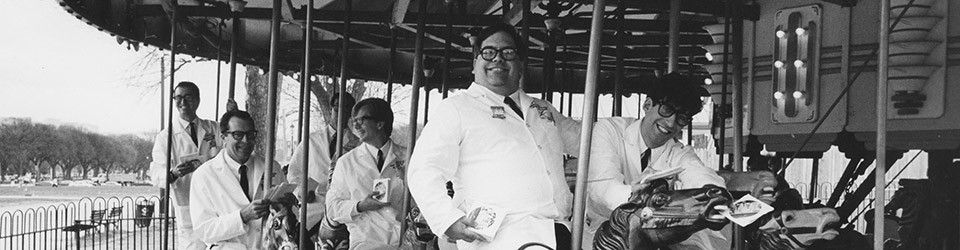
This past week the New York Times had a terrific essay written by Anika Burgess entitled The Analog Allure of Photographers’ Contact Sheets. Not only was it a good read, but it was accompanied by reproductions of some wonderful proof sheets pulled from the newspaper’s archives. Sorry, that’s what I’ve always called them and the terms are interchangeable!
You can find it here: https://www.nytimes.com/2025/08/18/arts/photos-contact-sheets-jfk.html
After reading it, I got to thinking about what we can learn from studying our own proof sheets. We all make proof sheets of our work. OK, I hope we all do! If you don’t you need to!! I’ve written about them before, but for the uninitiated, a proof sheet is simply a print that displays all the images from a roll of film. When we look at it we can see what pictures are worth printing, whether they need to be cropped at all, and whether they were properly exposed.
We study them with our magnifier loupes and then mark the frames that look promising. In my case I also use two small L shaped pieces of a scrap mat board I can adjust to determine whether a picture needs to be cropped at all. Then I mark the frame accordingly.
But is there more we can learn from our proof sheets? I think so and agree with several of the points made in the Times essay. “With a single contact sheet, a photographer could assess all the decisions and hesitations, steps and missteps that went into taking the photo.” The photographer can also go back and study “What you were doing, what your story was, what you were trying to say, were you successful, what could you have done differently?” This was referring to work done by newspaper photographers, but it really applies to all of us, whatever type of pictures we make.
We don’t always get around to printing our pictures as quickly as we’d like to. Or sometimes we wait for a certain time of the year. I’m pretty selective. I don’t make lots of prints during the course of the year, and sometimes I just wait until the last couple of weeks to print the ones I want. Having stepped back for a while, the edited proof sheets enables me to take a more objective and studied approach to looking at the frames previously selected. Now I can see if I still feel as good about them as I did before. I might even notice something that didn’t strike me during the first go around, but now looks better!
The proof sheet also serves as a visual diary … at least for me. It helps me to recall the events that transpired when I made my pictures and brings back fond memories that go beyond the making of the picture itself. Also, having this “record” is particularly useful as I go back and look at older proof sheets for possibilities previously not considered. In fact, I’ve been putting together a list of newly seen possibilities … some of the pictures having been made over fifty years ago.
Finally, I love being able to hold my proof sheet in my hand and physically look at it … slowly … and this may be the most important thing. Digital capture doesn’t enable this, although I suppose a physical document could be made. I’ll bet this never happens though. I don’t want to see my possibilities on a computer screen. Like the Times piece said “… a contact sheet is everything a digital photograph isn’t: immutable, physical, finite”.
In the end though, for all its usefulness, and for all it enables, the proof sheet says a lot about you … as a photographer … and a person.
Stay well,
Michael
If you look at Vivian Maier’s proof sheets, for the most part, will see one image of each subject. She did not shotgun shoot – spray and pray. No bracketing, no multiple shots to try to get “the one”, etc.
She was spot on regarding subject matter, composition, exposure, and most need no cropping. That says volumes about her in my opinion.
Finding Vivian Maier, a fantastic video. So many “famous” photographers came from wealthy families with incredible opportunities given them. She worked as a struggling nanny and imo blew many of the top dog photographers away. She was not getting boat loads of allowance cash from mommy and daddy “go be an artist kid, and try to stay out of trouble” and drinking coffee in posh cafes. I have a lot of respect for that woman.
Rob,
Great to hear from you! You are absolutely right. Vivian Maier was an incredible photographer and we are all lucky she was finally discovered!
Best,
Michael
Many young people don’t know what a contact sheet is. And when you show them, they are amazed.
Thanks Paul! Not surprising on both counts!
Best,
Michael